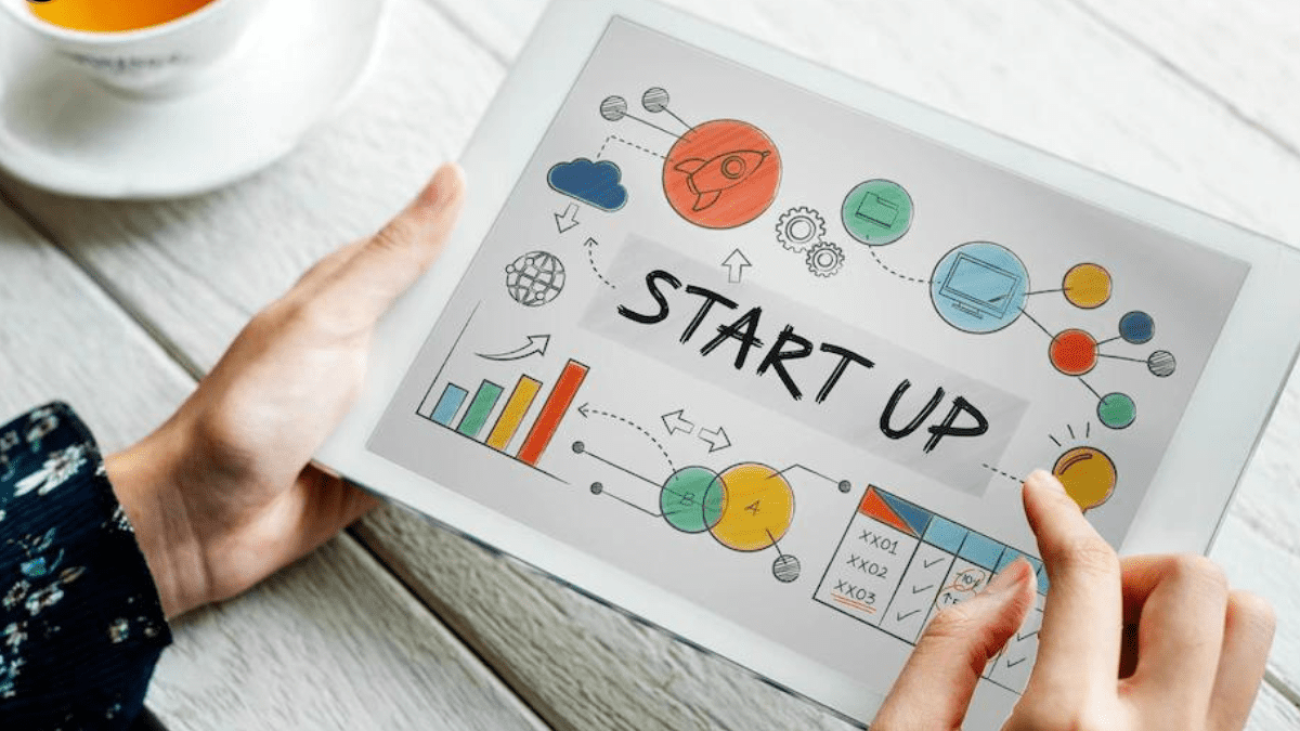
Our usual mentality is tied down to proving that you’re better. If you are an employee, you need to consistently prove that you’re better in order to stay on the job. Otherwise, somebody else gets promoted instead of you. If you’re a small business owner, you have to keep proving that your product is good. Otherwise, you’ll lose your customers.
What Customers are looking for?
However, in a down market, customers are not really subconsciously looking at better people; they’re looking at the right people. When you say you’re better, the customer thinks there has to be someone above that level. There has to be a premium. They must be more expensive.
What you need to do?
The moment you say I’m better, the thoughts going in their mind is let me meet them, then based on whatever they tell me, I’ll go out into the market and find somebody cheaper. Proving that you’re better or your product is better may not always be the best idea. But what I recommend is to get the word to enough number of people that resonate with you. You need to get your message to reach a maximum number of people, and if they show interest, you get them into a compressed format, in a compressed time frame of 2 hours max.
Demand-Supply Call
You have all of these people who’re interested in your product, you take them through a process, and this process is called the demand-supply meeting, in which you say this is what you need. This is the problem you have. And this is what I’m supplying. This is how I can help you. And you make them take a decision within a space of 1-2 hours as yes or no.
Express Highway Approach
You go through this target market in a pre-program fashion instead of just sitting back and saying I’m the best and then waiting for the business to come to you. You need to go after the business, not the customer. Do not change the customer; just figure out how many people are interested and get them into the demand-supply call or meeting, which I call the Express Highway. That’s because you take people on a journey; they’ll have to pay the toll on the way. If they don’t want to pay the toll, they can exit anytime. So, at the end of this meeting, they have to take a decision, either yes or no, and at a price point that you determine. A price point you have created so that it’s fair to them, that adjusts to some of their problems, and a price that is profitable to you as well.
Get your Message Out and Involve People in Meetings Repeatedly
Now you need to do several repetitions of “get your message out” and “meeting with customers,” so you make more money than you’re making otherwise. You’ll have to learn this concept. It will probably take 1 to 2 months to master it. Both these things have to be done right; when you attract people, that has to be done right, and when you go into a meeting with people who’re interested, that has to be done right. Both these points have to be crafted perfectly for it to work.
First, you need to get the word out. Then you need to connect with the people what they are looking for, what you have to offer, and get them on the Express Highway. The first is where your effort is going to go, and the second is where the action is going to happen.
How does the thing work?
How do you get people to take action? How do you get people to do business with you? How do you get people to move into a situation where they’re going through your Express Highway? Let’s go into the psychology of this. What’s happening is that the customer knows what’s going on in the mind of the business owner or the salesperson. So the customer knows that this person is going to ply me with something.
And the moment you start talking about this thing, they go into a resistance mindset, saying, I’m going to double-check everything this person is saying because I don’t trust them. In a time of slowdown or a crunch time, I don’t have the money, but I’m going to listen to them, and then I’m going to go and do my research. When they come to you, they say they’re very interested, but when you invest your time with them, you give them all the information, but they go back. They want to go back and check.
Two Issues
So the number one thing is that they know what you’re thinking, but you don’t know what they’re thinking. The second issue is they are going to use all the options available at their disposal regardless of how well the human connection is and what good a price you are giving them. They’re going to compare you with a few more people in order to arrive at a decision. Because in a time of strife or slow down, nobody wants to be wrong. So they want to make sure they’ve seen all the decisions.
These are the two items that the customer has or wants to have, but you don’t have, and you need to have, which is you need to know what they’re thinking. And the second thing is you need to have options which means if they have a different bunch of supplies that they were going to compare you against. Why don’t you have a bunch of customers that they are being compared against, and they know it and should know that they’re being compared with a bunch of other people. This thing is called posturing, and it cannot be faked. You cannot fake to a customer that I have options or other people waiting in line to see me unless you actually have other people waiting in line to see you. So this is the psychology of it.
How does this happen?
I will walk you through the steps on how this happens, and I’m going to backtrack that into customer psychology. So you need to understand what’s happening so that you’re able to implement it properly. So how does this thing work?
See, if a customer has a pressing need, there are only two pressing needs: they have a major pressing need; they got into an accident, they need to get to a hospital or something like that, or they have a minor need that is super irritating. It can be solved quickly, like a 50 rupee problem.
So if it’s a low-ticket problem, which is causing that big of irritation and then solve it regardless, but that problem can only be solved by a grocery store, and you cannot solve it. So you’re in a segment where you’re slightly more high-value than a grocery store and slightly lower value than a life-saving doctor. So then you’re stuck in that zone.
What happens is unless the problem is huge or a highly irritating small problem, then it falls under a segment where it’s not occupying mind space. Time is at a premium, and Energy is at a premium. If they think they have a problem, they see an ad or a pamphlet, or somebody tells them that they can solve it this way if you have this problem. Then what they want to do is they have something called Micro Attention span at that time. If the thing catches their eye, what they’re going to do is they’re going to take a photo of that pamphlet. Somebody told them something, and they want to write it down in the notes. They have a three-second attention span. In three seconds, what can they do? They’ll take a photo of this. They’ll figure it out later. Assuming one in ten cases, they’ll probably come to it during the weekend, and they’re going to spend 10 minutes on it. How are they going to spend 10 minutes on it? They’re going to go to Google or Amazon, and they’re going to spend about 10 minutes searching and double-checking.
Now, what is the third thing, in 10 minutes either they take their decision. Only one in ten people actually take that decision in 10 minutes. People don’t really take decisions based on Google searches anymore. That thing is also slowing down and then what they do is what they have always done in life. The time-tested solution to every problem is to phone a friend.
If you look at all of the different decisions you’ve taken that are not super irritating small items that you need to solve immediately or that is not like major life-threatening items that require your attention, only 1% of the decisions get taken immediately. Maybe a total of 4-8 Percent of decisions get taken via Google search. And if a decision is taken at all, then the overwhelming majority of decisions are taken on the recommendation of a friend. So what people do is they call somebody who in that area is smarter than them, and the person tells them, hey, I think this is what you should do.
They doubt that the other person either doesn’t have all the information or is not invested in the problem as much as I am invested. So then the other guy doesn’t even care. They just shoot off the ideas on top of the head, right or wrong, but they’re probably going to take the decision based on the recommendation of a friend. Because by this time, they’re already confused with a bunch of things that they’ve done, and all they need to do is decide what they want to solve this problem today. They’ll just do whatever that friend tells them.
I am diving deep into the psychological stuff because unless you understand this, every other thing you learn on the internet will not help you. 99% of all these so-called smart guys, Facebook marketers are hurting right now. After the lockdown opened, high-end prices soared. This artificial market was created with low-end prices during the lockdown because real businesses were not advertising at that time. All of these guys have gotten swatted out. Therefore, how the human brain works is more important than all these tools and techniques. They can be learned within a period of 30 days.
Outreach Program
Where in these areas do you need to be? You need to be at Phone a Friend level. You must be the trusted person that everybody wants to do business with. But the funny part is nobody will trust you unless you’re at Micro Attention span of 3 seconds and Google/Amazon search of 10 minutes. Unless you provide both the other levels of information in large enough quantities, people will not trust you as a friend.
This is what we call an outreach program. You need to provide three types of content. You need to provide micro-content in large enough quantity, you need to provide training content in large enough quantity, and you need to provide recommendations backed by experience. Why do you trust that one friend of yours? Because they have experience in that area. They have tried and failed and done all the trial and error more than you have in that area.
How do you do these three things?
I will talk to you from my experience because I’ve done it. In micro-content, there are two ways to do it. There is a freeway, and there is a paid way. Paid ways are Facebook or YouTube ads, LinkedIn, or Instagram. The free way is there is something called a dollar 1.8 strategy. It is from the world’s number one social-media influencer.
The micro-content is what people read, and if they’re interested, they come in. When they come in, you provide them all of the information that Google and Amazon provide them. Because people don’t want to go to Google or Amazon, they know they’re going to be plied with a lot of different sets of options, and they’ll never be able to make a decision. They are going to be even more confused than ever. See, you are going to provide them with enough information, and this has to be non-biased information. Do not create information that leads into your product; that’s cheap. Don’t be cheap. You provide them genuine value training content that clears the air in their head, and the moment that happens, they start seeing you as a friend. Then you give them some recommendations based on your experience.
You say, I have had some experience in here and based on this, here are my recommendations. Then one of those recommendations is your product. Just because you recommend a product doesn’t mean they are going to buy it. There’s another step after this (word out) called the Express Highway.
When you give them the recommendation, how do you select among these three recommendations I gave you? You bring them to the Express Highway. They go through the express Highway, and then some of them arrive at your product, and they buy your product.
Now, this micro-content is what we call an outreach program. In micro attention span, you got to have content with enough amount of information. You got to have training loaded with creating clarity, not creating confusion. Google creates more confusion than it creates clarity, which is great for you because you’re going to create more clarity then you create confusion and then you’re going to bring them into some recommendations which are based on your experience. And finally, they’ll buy your product.
Today we have part 3 of the training on how to make money in a down market. Previously, we talked about how you get customer attention and how you drive it towards your offering or your business house. I call it the business house or also the back office so that the structure of the Lean Startup is your message; that’s the first layer. The second thing is Outreach. The third layer is called the business house. I also call it the back office.
Now, when I first came out with this term back office or The Lean Startup and the three layers in the back office, I got a lot of questions from people saying, why are you calling it the back office? It’s my whole business. I have a shop. I have a consultancy. I have a chartered accountant firm, or I have a medical practice, or I have an architect’s practice, I have a small business. I have a factory.
I have a company; whatever skill set I have in the market for this product or service, that’s what I do. Why are you calling it the back office? That is my whole business. That is true, but that mindset needs to change.
What you’ve done is you’ve got customer attention. The customer attention is all over the place. You can use different tools technology. Let’s talk about the internet for a second. It is simpler to understand because everybody is there on the internet. So even the non-business owners understand this stuff. So customer attention is there on the internet.
You have decided the certain area where you’re going to solve a customer’s pain. You’re going to solve the problem, going to solve the pain, you’re going to bring them a solution, and then you craft your message and Outreach. That whole lesson that I put up previously, you need to go through the whole thing how the message crafting etc., is to be done, and then you amplify customer attention. And once this customer attention is amplified, you want to start providing them solutions to their problems.
Now at this point, what happens typically with Indian people? Why do I say Indian people because the Indian economy is in a huge stage of evolution right now, and if you understand the whole wave of this evolution, you’ll be very rich in the future. You will be future proof for the next few years. But if you don’t understand it, then regardless of how much education or understanding you get, you’re going to be stuck, and the same mindset will keep you small. It’s going to keep you middle class. It is going to keep you at risk of getting hurt by every little problem in the market, whether it’s political changes, GSTD monetization, Covid situation, or war.
We are tuned to say that this is my product, or this is my offering, or this is what I do; what we don’t understand is this is only 1 or 2 percent of the game. Once you have got customer attention, you have retained customer attention and have magnified customer attention. You need to figure out what they would love to have, provide that, and get paid for it. One of those may be your product, but you may not convert it to sales even at this stage. So, in a normal sales environment, people convert maybe 1-2% of all the market they got and meet.
In the Outreach Program, you will be able to convert, ranging from 10-30% percent. In certain scenarios, I’ve converted 40% also, it was not 100%, but even at 40%, it is a minority; more than half of them are not converting.
So what do you do? You want all hundred percent of them or as close to 100% as possible. Customer mindset or customer problems are solved in three ways.
What are the three ways?
Clarity
Education
Solution
The first thing that they want is they want Clarity. They are confused. They want clearance from the confusion. The second thing they want is education and the third thing they want is a solution.
Coming back to the internet, why do I use the example of the internet? Although much of my business runs outside the internet, my consulting business runs in the physical world. But why do I use the internet? Because people are spending all their life on the internet these days. So whatever it is that you provide them, they’re going to go to Google nonetheless.
Clarity
What are the things they’re looking for? They want to be clear in their heads. There is an ocean of options available to people. There is a glut of information, and there’s a glut of products and services with everybody yelling at them about the solution. I mean, you go to Facebook; they’re just crazy. What they want is Clarity. So what they want is structured information. What is relevant? What is not relevant? Of all the things that are relevant, which ones are important and which are not?
Education
The second thing is education. How do you utilize, or how do you actually solve the problem you have? How do you go about solving the problem that you have, which is tips and techniques?
Solution
And then, finally, the solution, which could be your product, which could also be a competitor’s product, which could also be a third product that you did not know existed today in the market. But the moment you find out, you need to include it in your product portfolio. Now, you don’t need to own these products. You don’t need to buy them and keep them in the warehouse—nothing like that.
We have a concept called Promo Partnerships. Once you’re an expert at getting customer attention, amplifying customer attention and getting them to a point where they want to do something, you need to have a range of options. You need to have a range of options to give them a range of options to get them and have them choose whichever one they like. Now, this is a limited set of options. You already provide them simplified structured information, how to take decisions. You’ve given them some tips and techniques on how these different products and services can help solve their problem, and then you bring them to a set of products and services where all of these products and services are going to pay you.
So you have a promo partnership, and all of these different companies you promote to the customer; instead of being stuck to your one product, you provide a plethora of products. So regardless of which product they choose, you get paid. Now you may not get paid 100% of the profits. You may have to split it depending on the deal with the actual company providing the product. You will be surprised to find that 83% of all companies in the market pay promo partners to get them customers. So you can form a promo partnership with a bunch of companies.
What happens if you provide five different products and the customer doesn’t like your product for some reason? They go to any of the other four products; you’ll still get paid. So what is your success rate now? It’s up from 2% to maybe 10-15 %. Suddenly, you’ve been Quintupled your success rate. Now, you can structure these tips and techniques into the form of a program where customers actually pay you to solve the problem.
Customers pay you to understand the tips and techniques to solve their problems. So you get paid over here. How much can you get paid in the Education part? Maybe 20 to 30 percent conversion. So you got 10 to 15 percent conversion in the Solution part and 20 to 30 percent conversion in the Education part. To provide strategic information, you can utilize that as an advertising technique where you provide structured strategic information for free, or you can actually collect money in the Clarity part.
So, you get paid another 10-15% in the Clarity part. For all the marketing activities that you do, you collect close to 50%-60%. Now, this is the conversion rate. This is not the amount of money you make. In some of these cases, the money involved is maybe less, and in some of the cases, the money involved will be more. What if I could tell you that these customers will now pay for life. So how does that happen?
Third Layer: Constant Improvement
In the first blog, I talked about layer 3 that we never discussed until now. The first layer is the Express Highway, and then you have the customer outreach. There is a third layer to this. The third layer is called Constant Improvement or Constant Learning. Why do you have constant Improvement? Because once you start making money from all of these customers, they know you, like you, and trust you. So it makes sense that whenever they have the next layer of problem in a major area, which has some relation to your industry, your product, your service, whatever you provided them or whatever problem you solve for them, they’ll come back to you. At that point, you need to be ready with the next layer of products to supply them. Now, they are going to buy from you in almost 100% of the cases. Whatever they want to buy, they’re going to come to you. Why?
Because they already did business with you. Because you already provided them with a great amount of Clarity, provided them with great products and services and a great amount of support. So you did solve their problem. Imagine if the area of problem is in their health, and they were able to get a fitter body or something like that while working with you, getting your tips and techniques, your educational program and then actually utilizing, let’s say, something like supplements or something that you provided them. Now what happens is if somebody in their family has a blood sugar problem, who are they going to come first for advice? They are going to come to you. They are going to come to you, and at that point, you need to have this entire three layers of information, which is structured information and educational product and actual products and services for the diabetes problem. What if somebody in their family starts having a cholesterol issue? You need to have another three layers for every problem in the overall healthcare industry.
All you need to do is keep adding products and portfolio services to your total business. And that’s why I call it the back office because your product, which could have been one of those, has ceased to be relevant. The game is changing. Being stuck to a product or providing a product or doing anything like that is less than 2% of the market, and that you probably feel that already right customer attention is going all over the board. Trust is down in a down market. People don’t trust you. So what you must do is build trust. Once you build trust, you can monetize that trust a hundred ways from Sunday. The concept is called a business House. Business house means not only will you have your own product in there, but you will also have promotional partnerships with a bunch of other products and services that you trust, and you can transfer their trust to your customer. You’re going to have educational products, which means you’re going to bring down all of the learning knowledge you collected in your last 20-50 years on the planet, and you’re going to create an educational product out of that. You’re going to get paid for that either directly or indirectly.
So you can get paid on all of these different layers and improve your conversion rate from 2% to 60%. Now, in the last three months, what I’ve done is, I’ve created these layers of products and services sitting at home in the lockdown, and my conversion rate in my traditional businesses is close to 15% in this business. I’ve hit a max conversion rate of 40%.
The fun part of this is that once you build this community, it pays you forever. Now, this customer community at every level when they need a problem solved, who will trust the most? They’re going to trust you.
So what are the three areas for you that you need to build? And these are critical.
Selfie Video
The first thing is a selfie video. If you do not understand, we’ve discussed a lot of different concepts in the last two or three blogs. If this sound interesting, that’s great. If you don’t understand all of them, that’s cool. Not to worry. We have a structured program that you can utilize at some point. These are the three things I want you to know that you will be doing if you want to utilize it to add six figures to your business or your gross profit in the next 30 to 90 days. Selfie video is free and can be learned anytime or anywhere.
Community Building
The second thing is Community Building. Create a Facebook group and form a community where you can add value and increase your people’s confidence.
A layer of Three Product Lines
And the third thing is to build a layer of three product lines. Or build up a portfolio of a minimum of three product lines. One is an informational product that sells on the internet all day and night long. Second is your consulting service or a community product. Let’s say Consulting service. And then you have a hard product and service or whatever you have. If you already have a product and service, that is great. If you don’t have a product and service, you can set a promotional partnership with many products and services, which are exchanged in so-called marketplaces. You go to a marketplace, you can set up a promotional partnership with relatively ten companies in a single day.
If you already have a product and service or already have something that you’re offering in the market, that’s great for you. I was offering a High ticket Consulting service for corporates in the market where I get paid over 50,000 Rupees an hour. So, this is not something that I could offer individuals from the internet because nobody pays fifty thousand rupees to someone per hour on the internet. So what I did was create a layer of information products. I created many affiliate products, which are products that can help you get all of this customer attention that we spoke about previously, magnify all this customer attention that we spoke out of previously and put money into your bank account. And then, I promote these products to people there in the launch program. People who are interested in the products or services, all of them join my community and work alongside me.
Today, we’ll talk about the structure of opportunity. There are three little secrets about the opportunity. We are talking specifically about the financial opportunity because all of us are in the game.
First Secret of Opportunity
The first key determinant of any opportunity is very few people can see it. So it’s not apparent. It’s not apparent to the untrained eye. You need to be trained eyes to see opportunity. You should have been in the same industry for 10 to 15 years before you start seeing opportunities that other people don’t see, or you should have been maybe an entrepreneur because entrepreneurs go out and play in the market every single day.
Because every day is a day of risk and reward for them. They are trained to understand certain opportunities. And then there may be some knowledge that you understand so much even though it may not be your profession. It may not be your kind of a paid profession. It’s a hobby that you followed through for so long that when you see opportunities that could be financial opportunities, other learning opportunities, or anything else, you are probably going to be more trained to see it than anybody else.
Second Secret of Opportunity
Now the second thing is opportunities don’t last long. Why is it? The reason is that when an opportunity comes by, very few people recognize it. They start taking advantage of it, and some of them fail, some of them succeed. Very soon, the people who succeeded will open the path for other people to see the opportunity. Other people start identifying it if they fail to try to capitalize on it. They learn new tips and techniques of success from the people who have gained from it. Very soon, they will also start getting results. Over time, as everybody starts to get results, the thing becomes publicized and glutted.
Third Secret of Opportunity
The third thing I want to talk to you about is an opportunity that’s on the rise, and that opportunity is called Covid. Because a lot of industries are on the decline and certain industries are on the incline. Certain people who know how to utilize slowdowns are on the incline. They are taking advantage of it.
Now, two types of people take advantage of opportunities: short-term gainers and long-term gainers.
Short-Term Gainers
When the short-term gainers see the opportunity, they probably take some benefit out of it. But every opportunity contains within it the seed to mold yourself and become better, the seed to utilize that opportunity. Utilize the learning, mold yourself, submit and become better. Become better for the future so that you can see other opportunities in other industries and take advantage of them. Short-term gainers take advantage of the opportunity, but they don’t learn, and they don’t mold themselves. They ride the wave they find, and then the opportunity goes by, and they’re chilled out in the future. They talk to their kids and grandkids saying, hey, there was one time when I got a windfall gain.
Long-Term Gainers
Long-term gainers submit to the opportunity. They mold themselves, learn, and learn how to become future-proof. They build skills that will be useful to them in identifying and capitalizing on such opportunities even in the future.
Covid Opportunity
This opportunity (Covid) is not about the smart and the fast and the experienced to take advantage; it’s about the people who thought that success was beyond them, who probably had lost a little bit of hope as well. They probably thought to themselves; this is how it is, this is how it’s going to be forever. For that kind of person, this opportunity is extremely good.
Who is the kind of people who can benefit from this Covid opportunity? There are three types of people.
First Type of People
The first type of person is somebody who’s a corporate professional. They’ve made their gains.
Second Type of People
The second type of person is certified or qualified professionals like doctors, lawyers, chartered accountants etc. You are lost in an ocean of other doctors, lawyers, chartered accountants because India is a mass producer of certified professionals. You don’t feel so happy anymore. Why? Because you are like that mutual fund. The opportunity is small, but the oversupply of this qualified professional class of people is just way too high in India; 10 times as many as required. Maybe you don’t feel so special. Maybe you want a little more control.
Third Type of People
The third class of people is the small business owners who are sick and tired of every political, social, disease-related, and kind of slowdown, whether financial or political or social or disease, or whatever. Anything that happens in the country, it’s your business on the line every time. You are the first one to go offline. Your cash flow is the first to stop. You are getting sick and tired of that game. Now you’re looking for something new.
For these people, this Covid is turning out to be a major money-spinner because you have already proved you’re successful in your real life; you just need a new vehicle. But let me warn you, in order to utilize this vehicle is a lot of self-molding and self-submission that’s going to happen. So, let me warn you upfront.
There are going to be two types of people from the Covid opportunity.
Type 1
The first ones are type 1. They are the people who are probably going to take some advantage of it, and they’re going to say that this opportunity is good. It’s made me some money to help me pivot. They’re also going to learn, mold, and submit and train themselves how to behave in the future because 77% of the skills you’ve learned in school and college will be obsolete in the next eight to ten years. So you want to future-proof yourself.
This is an ongoing process. You’re going to get into a process of learning and molding and submitting and changing and improving. In the next eight to ten years, they’re going to totally kill it in the marketplace. There will be one quantum growth—the kind of growth not seen before.
Type 2
And then there are type 2 people. 8 to 10 years later, they’ll be telling the kids and grandkids that, hey, there was such a slowdown. People were locked in the house for three months, and the pollution really cleared up, and birds were tweeting in the sky. Those will be the kind of stories.
Then there will be the capitalists, the people who want action, and the people who are willing to pay the price; that’s type 1. These are the people who will go for long-term gains and domination. Then there’s going to be type 2. These are the people who are going to go for the short-term gains. So type 1 is the go-getters. Type 2 are the kind of people who witnessed and did nothing.
The first thing to increase your focus is De-Clutter. Throw out all the waste in your mind and free your mind of everything useless.
Do Not Waste Time
The second thing is not to waste time. All the activities you have been doing on the phone will not get you anywhere. Stop using WhatsApp and Facebook all the time. You need to mute some groups and leave some of them because you will waste your time if you stay there.
Stop calling your relatives every day and do something constructive. There is no value in it. Every day, people call you for no reason, and you are answering the call and just wasting time on the phone. All of those extra 10-15 minutes twice or thrice a day add up to not achieving your goals because peak productivity is reached after 4-6 hours of focused effort.
So it’s only when you focus on one thing uninterrupted for 4-6 hours at a time that your brain will reach peak productivity and clarity. It’s not with one hour of work. You have to be totally focused with your phone off, and you have to concentrate on doing only one thing. No browsing around on YouTube and clicking everything that flashes in front of you. It’s only after at least 4 hours of focused time, more like 6 hours, that your brain really starts to kick in gear. They say that the human brain is better than a supercomputer; that’s a load of crap. Your brain is not as good as any computer unless it focuses on one thing. The processing power must be harnessed, and the harnessing happens in 4-6 hours of focused work.
Your phone needs to be on mute, silent or powered off. You don’t need to pick these calls. Keep one handphone or any cell phone for the delivery people etc. That should be your public phone.
Rules and Rituals
In business, I follow a set of rules. In my personal life, I follow what you call a certain set of rituals.
What are the business rules?
I don’t answer phone calls. I don’t do business on the phone, and I don’t do business on WhatsApp. Some of you may have asked me for a WhatsApp number, and I say no. If we are to speak, I work very closely with the people in the launch program. So some of you guys are working at a different pace, and that’s fine. I respect that. But if you ever want to reach out and say Hey Rajat, I really need this help. If you are in the launch program, you will get a call from me. This call is usually on Zoom because I don’t do business on WhatsApp, and I don’t do business on the phone, plain and simple. This Zoom call helps me batch all of the stuff together. So these are my business rules. I do business on Zoom, and I do it via email. So people who ask me for links on Facebook will never get a response from me.
The whole thing is captured on live video. The other link is written on the whiteboard. I read out the link from my mouth like 40 times. Say, if you can’t find the link, don’t expect the link from me. But if you send me an email, you will always get a response from me. So I do business by email. Even if you’re not in the launch program, you’re part of the community. If you ever send me an email, you will 100% get a response from me.
The responses are also batched. I do it once a day, towards the end of the day. And if I cannot get back to you, you will get a response saying, I’ve read your email, but I cannot give you a good response right now. So you wait for two days, I’ll give you a good response.
The third thing is batching. I don’t particularly appreciate putting people into one big lump of community and then trying to help them build their startups. So I have small batches that I interact personally with all of them. And if somebody sends me a mail saying I missed your webinar, I want to get in at whatever price, just let me know. I don’t do that. I don’t do that because I like to work in batches, which helps me save time. Then it’s not one big batch right now because we are at a formative stage. So I really want to get a personal touch and figure out what’s happening in everybody’s business life and really help them out.
But if somebody says I want to get into your program outside of that, I don’t send them a link even at full price. If they can find it on teachable or something, they can absolutely get in. And then I’ll figure out what batch to put them in. But I don’t promote my links outside the webinar actively because I don’t want a bunch of people spread throughout the week that I cannot track, and I don’t know what’s happening with every one of them. So there are different batches at different stages of their development, of their startups. And, I like to put them in batches.
So if somebody misses the webinar, I pretty much have to tell them with all due respect that you just have to wait for the next webinar because I launched a batch pretty much every other webinar. In some of my webinars, there is no batch launch. So this is just information, and you can take the information and enjoy it, and some of these webinars have batch launches built into them. So at the end of the webinar says, there’s a 10-minute window. You can take a decision. I’m launching a batch you can get it.
Now, if you are outside the webinar, you can’t get what’s taught in the webinar. That’s my business rule. I don’t do this stuff because I want to do this right, and I have limited time, and I want to use that time to the best of my abilities. These are my business rules, and I don’t do business on the phone.
What are the rituals every morning?
Similarly, in my personal life, I have rituals. I have to read my goal every morning. I have to read my goals, or the first thing in my wallet that comes out are the two gold cards. I’ve already completed my short-term goal. And the goal of August, which was a six-month goal, has been achieved in May, which is three months from the launch date, and then I have separate goal books. So I have one goal book which has all my long-term goals written down. I write these goals every single day, twice a day. So if you’re in the launch program, this whole thing is given in module 1, in which you have all the goal setting.
I have diaries where I track all the time that I have spent. How much time exactly I spent working on this particular business line, which is the startup Frat business line, is written in my diary. There’s a tracking of how much time I put into this business. I’ve got some notes saying, what the things I was able to achieve are? What are the things I missed out on?
The reason I got my six-month goal in three months is not that I’m smart, and the program will make you superman overnight, and you click this button, and you’ll make a million dollars—nothing like that. I had budgeted 30 hours a week to spend on this business line. Because of the slowdown, my time was certainly much freer. Now, if you look at all these week-to-week time trackers, I have spent anywhere between 56-64 hours. I’ve been able to go to a max of 64 in some weeks. And in some weeks, I’ve gone to a minimum of 56, but at an average of over 60 hours a week building this business line without distraction, which is why I was able to complete my six-month goals in two or three months.
With every launch program, I tell everyone that if you don’t have 30 hours a week to spend on a new startup, you cannot work with me because it takes that kind of time. I’m not going to lie to you saying how you can work like 10 hours a week and get this done because you won’t get this done. If you don’t have 30 hours a week to work on your new startup, then I cannot work with you because I cannot be the reason for your failure. I tell that to everyone upfront. That means fewer batches and fewer students for me and higher quality work with committed people.
And this is just one business line. I have the other business line. My Copper Creek Management, which is the Corporate Consulting business line. All of this stuff is tracked down in my diaries. This is how much time I’m spending in each business line. What I do each day, I write it down in my diary. So they get filled every single day.
Everything is planned on my Google Calendar hour by hour. I have my life goals: family goals, money goals, wealth goals, society goals, etc. What do I want to do for society in my social services outreach, all of that is planned and tried. I’m pretty serious about this stuff. Al these rituals help me stay focused.
Batch processing
Batch processing is all the kinds of mundane tasks that take away your time. I told you about one of the batch processing in which I call all my relatives and everybody on Sunday afternoons. They know that they’re going to get a call from me on Sunday afternoons. If I don’t take the call, I’ll send them a WhatsApp immediately saying I’m in the office. If it’s nothing urgent, I’ll call you on Sunday. And that’s done. If there is something urgent, they’ll let me know by WhatsApp, and then we’ll figure out how to take care of that. Not answering calls has really helped me.
Another batch processing item, I have my whole food stuff outsourced, which means my cook figures out what I want to eat. She has her own expense accounts. She figures out what I want to eat every day. She doesn’t bother me with what is to be cooked and how it is to be purchased. Between my wife and me, we have separate food habits. She likes to cook something for herself every evening when she comes from work, like something fresh and nice. I don’t care about that stuff anymore. What I care about is getting ahead of my goals. During the lockdown, I made a lot of “Khichdi,” so I could eat it 7 days a week without any distraction from cooking anything else. I put my food in the fridge, take it out, microwave it, and eat. I’d eat it even cold because I didn’t want to waste any of my time.
I’m not bothered by it if you judge me for eating stale food. But when I am working on a mission, that will change our lifestyle tomorrow. So I don’t care what I eat for food. I batch this stuff, put it in the fridge and a microwave small portions of it once a day, twice a day, and eat it. And that’s helped me because all of this stuff is out of the way. People complain that their time was spent cleaning the house and cooking food in lockdown, and all of that because the maid wasn’t coming.
My time has maximized because there’s no maid to ring the bell. I did not have to eat at a particular time, which is why, during the week, I have separate food habits from my wife. She’s very nice. She will cook for me. But then, the food is cooked at 1 o’clock. I’m busy doing something that I cannot leave because I’m in the focus zone, and the food is lying. It’s getting cold. And then I have to hear about it later that, I cooked some fresh food for you and now the whole thing is stale. Should I put it in the fridge?
I don’t want to talk about it for six days a week. Now she’s super nice to me. Every day in the morning when I wake up or even if I go to take a nap in the afternoon when I wake up, there’s some nice fresh cold coffee waiting for me on the bedside, which is something I love. But broadly, I don’t want to deal with anyone. I don’t want to talk to anyone, and I don’t want to decide whether to eat at this time or not to eat at this time. If I feel hungry, I go straight to the fridge, get that stuff out and microwave it, or I just eat it cold. I don’t care about this stuff.
Focusing on food and calling your relatives 40 times a week is a complete waste of time. It doesn’t add any value to anyone. I want six days of complete peace and quiet, and I don’t want my family to ask me if I’ve eaten my food.
Conserve Your Energy
I’ve reduced myself to two meals a day during the lockdown. Why? Because of energy. Every time you eat a meal, it takes a little bit of time to digest, and you cannot focus during that time. Every time you go for your office lunch, you cannot focus between 2 and 4 PM because your body is digesting food. So your brain is not focused at that time because digesting the food is an energy-intensive process. So I cut down my meal times from 3 to 2 so that I have less time to digest my food. I was able to work for 64 hours a week on my part-time business. That’s how I was able to do all of the stuff that I do for you guys.
The more you eat, the food will actually steal your energy. So what is the thing that will give you energy? The thing that will give you energy is water. You need to be drinking four liters a day. If you’re a lady under 60 kg of body weight, then maybe you can do it in three liters, but that is the bare minimum. Medical standards are 2.2 liters. So you need to drink at least 3 liters ideally and go up to five liters.
There are athletes in the world who drink 15 liters a day. They are drinking 12 to 15 liters of water a day just to have the body perform better. You need to be drinking at least four if not five liters a day, and this is the stuff that’s going to keep you in high energy. Your focus will keep your brain working at full power, and it’s going to help you in your sleep quality and everything.
So, if you start drinking 5 liters of water a day or at a minimum of four liters, your sleep quality will immediately improve. And in five hours a night, you will be able to get the same sleep that you would otherwise get in 8 or 9 hours a night. Plan your day so that you can get your productivity to 2x, 3x of whatever it is today, and drink enough water to stay healthy.
We have something called The Lean Startup, and The Lean Startup has three different stages.
Message
Outreach
Business House
Message
Your message is what you can do to help a particular person solve a particular problem. The message is whom can you help solve a particular problem they may have right now. Then there are some perennial problems like health and wealth. Everybody wants to be healthy. Everybody wants to live forever. Everybody wants to be wealthy. Those are definitely big markets. So there are like 100 different small markets where you can go and help people.
For example, building a skill like playing guitar is suddenly becoming a big market because people realize that they need some time to decompress because the whole family has to stay at home and work from home. Building these skills suddenly becomes a new market because not only do people have the time, but people have urgency because everybody is stuck in the house. The pressure goes up after a while, and you need to reduce the pressure. So you need some right skills to decompress. That market is suddenly becoming huge.
Similarly, people are spending more time inside the house with things like home gardening. They want to be creative. They want to bring out their creative side. A lot of travel time that was being wasted being stuck in traffic jams, going to work, coming back from work is saved.
What you’re supposed to do is you need to craft your message, which is very concise that says, if you have this problem, I can help you solve this problem. Whose problem are you going to solve? And what solution are you going to provide? That is your message.
So, the first part is problem-solving. Whose problem do you want to solve, and how you’re going to help them.
The second part of your message focuses on you. Now, it doesn’t focus on your expertise, it focuses on what you stand for. Is there a problem that you solved for yourself? Is this the same problem you earlier solved for yourself, and you had some roadblocks. Were you able to get across the roadblocks by improving your mindset using secret tools and techniques?
So what do you stand for is the driver of business today, whether it’s corporates or individuals or small business owners, individual professionals, like doctors, lawyers, chartered accountants, whatever it is. What your message stands for is a huge driver of business in today’s market.
Fears
I’ll give you the example of Amazon. It is a trillion-dollar company that has done so many different things that you can keep talking about it. So what they stand for is they said, when a customer goes and buys something, there is always that fear; the fear of not getting the right product, the fear of buying a product and not being able to utilize it properly, the fear of buying a product and then having the product faulty, and then spending and wasting your own time driving over to the mall again and then dealing with the salesperson to return the product and get your money back.
First Fear
There’s a lot of fear, there’s this gap where a customer wants something, but at the same time, they are not getting it because there are different issues involved. What Amazon said was, I will remove this fear from the customer’s mind to a point where it is just impossible not to do business with me. So they say, do you want to waste your time going to a mall, driving your car, putting it in the parking lot, looking for a product that may not be in stock? No problem, you can search our online directory without getting out of your house, and you can search for all kinds of products that may or may not be in stock. So you save your time.
Second Fear
What is the other thing? The second thing is that you may buy a product and then find out that in a different season five days later, a particular brand is running a discount or the product you want to buy is cheaper in a different store. No problem, what I’ll do is bring all of the stores worldwide, all of the manufacturers around the world under one roof. You can compare all the pricing, relative delivery, timelines, shipping charges etc., and figure out which one you want.
Third Fear
What is the third fear? What if the product malfunctions? You can return it even after receiving the delivery of a product. You can return it, no questions asked. So there is that comfort and assurance built-in. Not only that, if we say we’re going to ship in four days, chances are we’re going to shift inside of four days. So it’s not that you’re leaving on your vacation on day five and your product hasn’t arrived. So basically, you’re stuck. You paid the money. The product is in transit. You’re not at home to receive it. So, if we say we will ship in four days, it’s probably going to be inside of four days, never above four days. So that is the second level of comfort.
What’s the third level of comfort and assurance? They said during this entire process, if you change your mind, you can cancel your order. If you receive the product, you can cancel your order again. We’ll return the money, and then somebody will come and pick up the product from your house. In fact, chances are, we’ll probably refund you the money first before a delivery boy come and pick up the product from you. So the money goes back to you first, no questions asked.
It is impossible not to do business with Amazon. So that’s what they stand for. They said we believe that there is no reason for a customer to be afraid of anything if they do business with a trusted partner. Now the trusted partner may have their own products, they may not have their own products, but in any situation, you have a guarantee that when you do business with these companies, not only do you get value for money, but you also get valuable service, and you have the assurance that this is the best person you’re doing business with under the sky.
So what do you stand for also has to be defined? Say, this is why I am doing what I am doing. I am a retired corporate professional or a medical professional, but this is what I have. This is the problem I want to solve for you. And this is what I stand for because it’s a passion for me that I’m going to solve this problem for X number of people. Because it’s a calling, it’s a mission, and this is something that you call turning your message into a movement.
You’re offering to a potential customer, which is, hey, this is the problem I am going to solve for you. This is the reason I want to solve this for you because I stand for this. I want to help X number of people solve this problem for themselves. And when you are establishing this, people are going to be drawn to you, not because of a product, but because of a deeper connection. Business with the feeling is great, and the partnership is solid. Not only do they want to consume your product, but they also want to share your product because they believe in your movement.
Outreach
What is the second item? The second item is an outreach program. Once you have this in the Lean Startup, what we say, message is 80% of the game. Why is this 80% of the game? Because it requires a shift in mindset and shift in mindset is sometimes may take a small amount of time, but it takes a lot of mental effort to see these things differently because we have been traditionally taught to think, especially the people who are in a job, especially the people who are employed corporate professionals.
When you go out and collect money, when you go out and ask for money, it is something to be ashamed about, which is why most people say, I am an MBA, I will work for a company that asks for money from its customer that works for a boss or a mentor or a CEO who is out there asking for money, but I won’t ask for money directly. I won’t ask for money from my customers directly. Although in a job, when you go on a job interview, you do ask for money and all that, but you do it once, and then hopefully, the job keeps you alive for 5-20 years.
There is that whole mindset that says, when I have to go out and ask for money, there’s that mental block. You break through these mental blocks when you form your message and try to turn it into a movement. Those mental blocks are to be broken because when you go out into the market, you must be full of confidence that you’re the best person on the planet to be doing business with.
The outreach program brings your message to the world in a concerted fashion, laser-focused fashion. Throwing it out on billboards and pamphlets and YouTube, that’s not going to work. This thing will go out in a concerted fashion to a limited set of people you control. This means if you are a corporate professional and you don’t want your employer to know that you’re trying to build something for yourself. It’s time to stand up on your own two legs. You don’t want them to know because they may have problems with it. Then you have control over who finds out what you’re up to. That’s total privacy and laser focus targeting. The message goes to the people you intend to go out to and it excludes the people you intend should never see it.
Then you have your message. It pulls a set of people who are interested in what you’re saying like a magnet. This outreach program can be done by phone. It can be done on WhatsApp, can be done on Outlook. It can be done on Facebook.
There are different ways to skin a cat. This outreach program goes out and pulls the set of people interested in what you’re saying like a magnet using the magnetic power of your message. And when they get pulled to you, you bring them into something called your business house, which is a set of products and services or tools and techniques or mindset training that helps them achieve the goal they want. The business houses are also structured in a fashion where regardless of whether you make the product, manufacture the product, don’t manufacture the product, and just label somebody else’s product because you deem it to be the best possible product to solve your customers’ problem. Again, there are thousands of ways to skin a cat, but once you build a business house, the customer has to find a guaranteed solution to their problem, regardless of which tool, technique, or product they use.
It doesn’t have to be product focus, it has to be solution-focused. When people roam around in your business, which is your super mall, which has all kinds of solutions available to their problem that they can choose from. Remember that these people have already expressed an interest in what you have to offer; they’ve expressed a need. The trust is already built. They like you, they like your message, they like what you stand for, they express a need. During this outreach program, you get to talk to them; they express a need, you bring them to the business house, by which time there is no selling to be done. The customers walk around in your super mall. They find a host of solutions they can get or that can help them solve a problem, almost all of them available at a fraction of what the next best person can provide them. And we do this using a secret technique called productizing.
#NotTheGame
Don’t get too much confused. There are two big differences. Many people say I already have a business house, I already have my products and services, I already have a company, that is great. That could form all or part of your business house. You may need to expand your thinking, and you may need to expand the number of options you have for the customer. A business house is something we called #NotTheGame.
Most Indian entrepreneurs get stuck here. They start building a beautiful and expensive mansion to be their business house. They get so tied up doing this that they forget where the real action is. The real action is in the message stage. Your message is 80% of the game, Outreach is 10-15% of the game, and the Business house is 5% of the game. In fact, even if you don’t have a business house, you can bring the customers in and have somebody else promote their products and services to them and get paid at the back end. You can get paid at the front end, you can get paid at the back end too. This is not important because this thing will put you back years and years and years.
#TheGame
We have something called the minimum viable product, which is we aggregate these things together from some other manufacturers at a low cost. We build our own products as much as we possibly can in 90 days. And then, we focus on our message because it is 80% of the game. We call it #TheGame.
All of that stuff I told you about demand generation falls in here (#TheGame). Less than 5% of entrepreneurs in India really have mastered this because they never needed to. It’s a rich economy. People are spending money. You just have to put yourself in the right position, and you will also make money. So people have been focusing on the business houses for the last 60, 70 years. The game is in the message stage. The game is changing. There’s a glut. There’s an oversupply of products, services, salespeople, and marketing people. What you want to do is set yourself apart from all of them, which is this game.
A supply-driven market is a market when the economy is going well. Everybody has a lot of money. They want to go out in the market and figure out what to spend on just because everybody has money. What happens is, if you put your product out, your company out, or yourself out there saying, hey, I have this degree, and that’s my work experience. Could you give me a job? That works because people in the market are looking to spend money. Throw your message out; someone will connect to you, somebody’s going to buy from you.
However, in a slow market, the supply-driven approach doesn’t really work in the market we are seeing today. You must have a demand-driven approach, which is how to generate the demand. Generating the demand is a game of psychology. You cannot throw your product out and expect people to connect.
How does the whole thing work?
Let’s talk about something recent that has happened. Elon Musk has been launching rockets. Not only launching rockets into space but actually bringing these Rockets back to the Earth and then reusing these rockets, which has helped his company SpaceX cut costs on building rockets. So they’ve become so efficient with their program that the US government, in the last 40 years were not launching any rockets into space, have started launching their new satellites into space using Elon musk’s technology.
How does an earth landing happen?
How does the moon landing happen? Why is it so difficult to get a rocket back to the Earth? The Earth got the gravitational pull, which is pulling everything inwards. That’s how it keeps the atmosphere intact because it pulls all the air inwards, so it doesn’t Escape. So it’s got this whole atmosphere around. What happens is that when a rocket is going out of this atmosphere, all it needs is a little fuel and some escape velocity. That helps a rocket escape. But when it’s coming back, it becomes hazardous because the moment it comes into this outer gravitational pull of the Earth, it gets pulled in so fast and so hard that it’s going to crash. Even if you land it in an ocean, the rocket is going to break into pieces. If on land, then there is no chance that the rocket is going to survive. So this whole gravitational pull has to be managed.
How were they able to do it?
The key is when the rocket approaches the Earth or any other planet at an angle, so it’s not actually going in; it’s going by. And then what happens is that it should have enough speed that it doesn’t go in directly when it touches the whole outer gravitational pull. It has to manage its velocity so that the thing pulls it inside. It goes around the Earth and slowly approaches the Earth. It takes a couple of rounds. It has to maintain its speed in order to maintain stability. So that over a period of time, the atmosphere is pulling it inside, but it wants to take a couple of turns before it can land safely at a slant so it doesn’t crash into pieces.
Why am I telling you all of this?
Customer psychology is just like this. These days, people don’t have a lot of money because the slowdown has hit everybody financially in some way or the other. Businesses have lost money, so everybody is short of money. So the Earth is your business, and you’re throwing your message out, which is pulling them in. The customer is scared because they don’t want to come inside. They don’t have the trust. Once they want to come inside, you’re going to pitch them a product. Then it’s going to be a problem for you all.
That’s a problem because what you do is when the customer is passing by, you throw your product name at them. What they do is they take that product name and then Google it. What happens next is when they Google your product, Google confuses them even more. They’re not going to come again to buy your product if they Google it because they’re already confused enough.
So the exercise I have for you is you try and put a product name in Google and what happens is Google doesn’t take you to the website anymore. Google provides everything that’s inside their website on the search page itself. They will provide all of the information on anything on the search page itself. Below that, you have 40 other links and options.
So they don’t even want you to go inside the website. All of the information is on the search page. They expand their search results to whatever is inside your website and show it on the search page. The customer doesn’t even click inside because Google wants them to stay on the search page. They don’t want them to go inside and lose the customer.
What’s going to happen is, the moment you put your product name, customers are going to Google it, and then whatever they see there is going to pull them away from your product. Whether they see a competitor in competing products and options or whether they get all confused and then don’t want to decide at all.
So you never provide your product, service, your company name, your name, and your credentials up front. Never do that.
What do you do?
The Earth is your product, and you’re going to get the customer in step by step. First, you throw a little message out that interests them. Now, they don’t want to go straight inside because they’re like, no, I don’t want to go straight inside. I will check out your product because my time is too valuable. I want to stay on Google.
Once they connect with the message, say, I understand your pain. This is probably a pain if you’re out looking like that. I probably have a solution to your pain, and I understand that pain. Then describe that pain in two or three lines. Now, they’re interested in solving the problem or that pain. So they want to take a wise and stable decision. Now they come inside, and they check out your world a little bit. There’s another message. They talk in detail about their pain. The first message was maybe three minutes. This one is maybe 10 minutes.
They are kind of in your orbit, but they don’t want to land yet. They just want to keep going. They’re like, let me see at the slightest touch of boredom or any selling tactic you use, which is so cheap. Don’t be cheap on your way to greatness. If you use any selling tactic or boredom talking, they will go straight out there going to say, let me just speed up my engines and get the hell out of this gravitational field. But what you do is keep focusing on the message, which is their pain, and then you give them a few options.
Why don’t you be the Google for them? And you say, hey, I add these options that you can actually check out, and none of these options are your product. There are like seven options. They get pulled a little more into the gravitational field. You let them browse through the options; you let them hang around for a bit. Towards the end, one of those is your product. By this time, they’re very close to the surface and wondering maybe I want to land. They go through your options.
Now, you don’t talk about the product, but you talked about the promise, you say, I have tried out all these options and what I found for myself is one of them works better than the others because it saves you time and it is just about the right kind of budget, and you don’t waste a lot of time. We don’t waste a lot of money and get the job done in a very short while. Then you make them take action.
What is this action?
It could be meeting you. It could be taking a phone call with you. It could be attending a webinar or something. They have to set a time and agree to meet you in an environment where there is no Google. It is just you and them. The first part is called message. This is layer one of the startup frat model. The second part is called outreach. It is layer two of the startup frat model, and the last one is when they’re very close to the surface. It’s very difficult to escape from this gravitational field because that will mean losing all of the time and energy
If you could do all this to solve their problem with your product, then whatever you’ve done is during the outreach, you’ve taken something called feedback.
What is feedback?
Feedback in the four essential questions you need to ask your customer before ever bringing your product into the game.
The Four Essential Questions
Four essential questions will keep you in the game. If you don’t have the answers to those four questions, you don’t know the sale is going to happen or not. And if you do have the answers to those four questions, you will know for sure whether you do have the sale or not.
Now, all of those sales will still not convert, but you would have up to a 50% conversion rate, which is more than 10 times that of the market average. You go and talk to any sales and marketing person, and they will tell you that their conversion rate is between 2 & 4 percent. You got a conversion rate of more than 10 times that of the industry average.
Crafting your message does not take any money. It’s free. It’s free today and is free forever. The outreach stuff costs little to no money. You don’t need to build a building. You don’t need to hire people. You can use the internet as your servant to do all of this stuff. Today, you don’t even have to pay the phone bill. Zoom is free if you do a one-on-one meeting, or if you do a meeting for up to 45 minutes, it is free. If you do 20 people and do a webinar within 45 minutes, the whole thing is free. There is no money involved. This entire thing is free all the way to the landing. The only thing that costs money is producing a product.
This whole thing, this whole gravitational field, and the pattern and how much gravitational force versus how much velocity versus escape velocity, is called a product ecosystem. You can craft this whole thing for inside of maybe 20, 30 thousand rupees because most of the stuff belongs to your product ecosystem. And your product is one among three, so you got to build two other on top of it. And it’s free to build. Just to keep this thing together to give your customer a good experience. It costs maybe twenty to thirty thousand rupees.
The benefit of this product ecosystem is that it puts you right at the top in the five layers of influence.
How do you build this product ecosystem?
It takes 30 to 90 days. What are the components of the product ecosystem? Your personal consulting, a digital downloadable product, and your actual core product or service you are trying to promote. The customers don’t want to engage with you in a digital downloadable product, but they still want the information. There should be some format to do that. This whole thing is put together into a community where people can come, and there is no pressure to buy.
So most of the stuff is free, there is no pressure, but they have their own time to take their own decision except that they don’t take that decision in a Google ecosystem. They take the decision in your ecosystem. If you give a customer exactly what they want. They are passing by you throw out your message and say this is what you want? Here’s what I have, come and get it. They don’t want to take it. They want to Google you first. They want to check different competing things on Amazon or Google etc. And anything that they find over there is going to take them away from your product.
So what you got to do is throw out your message. The startup frat model is a three-layer model that says message first, outreach later, and then comes your products/services or your product ecosystem. This is the third layer. The message forms only 2% of the game and is free. Outreach forms 10% of the game and is free, and your product ecosystem forms 90% of the game. It is almost free except for producing your product. How much cost does it take to produce? But it is less than the cost of hiring one driver, and with that, you can create a whole product ecosystem and work in that format.
We’re going to talk about time. There are two types of business owners in India. I have seen this in my own experience and have been there personally. I am talking from personal experience that there are two types of business owners in India. One is the kind who wants to do something and make money. They want to do something constructive and bring some value to the marketplace and make money.
The other type is the one who wants to feel like they are doing something. Even if the money doesn’t come, they keep on fooling themselves that we are doing something. We are in the setup phase. We are in the funding phase. We have to hire employees. They’re always in this phase, and the money never comes. And then, after six months, the funding partner pulls out. Then they’re like, oh, I did that business, but it didn’t work for me. I have been an option two for many years of my life, so I know the mentality.
When you’re outreaching to customers, not doing any actual selling, not collecting any substantial revenue, this whole setup phase lasts for weeks and months. Then something or the other keeps breaking down, and then you keep looking for somebody else to solve that problem for you. That’s an option to the money as income. And then you’re busy doing all of this other stuff.
I’ll clean up the understanding for you because business in today’s time has become easy. What happens is that in this age that we are in today and have been in this age for many years, it is becoming easier for a normal person like you and me. Or like a middle-class person who doesn’t have the necessary qualification. Except that because the same reason that it has become easier for people like you and me to do business, it has those reasons we don’t really recognize the importance of the right thing.
I’ll just give you an example. We always associate doing business with a building or office. You think I need to get it fitted out with some nice decorations and all because employees will sit. Also, there has to be an AC, and then there has to be broadband. Once the office is set up, now you say, I need an employee.
That will take another three to six months because although we are loaded with a hundred and 35 crore people, it’s very difficult to hire employees. This whole thing takes six months to nine months. A lot of money has been spent. When you come down to finding business, you’re like, now I need to hire a sales guy who will bring the business for me. And if you haven’t brought business for six to nine months, I can guarantee that your sales guys will not bring any business for you.
We’ll just go into the main topic. What are the problems in society that you can solve? That’s what you got. Don’t think about I want to set up a factory. All the people are setting up factories and are running out of the country, and the courts are after them because they were unable to pay back. So, everyone is getting paid in the real market.
Everyone is getting paid to solve some problem
The more painful the problem, the better.
Why? Because the more urgent it is for people to solve that problem, they’ll hopefully pay you for it.
Now the third thing is the more people that are impacted by that problem, the better.
Find the people who are willing to pay to solve that problem.
That’s everything that comes under your message and outreach. That’s what you got to do. You got to figure out what problem we’re going to solve. How many people are impacted? Can I find these people? That’s it. And that’s your way to the money, which is why I say, The Lean Startup can get you into the cash flow scene within 60 to 90 days.
Coming back to the Indian context, because we are a broadly prosperous society. All of us are linked to some roots somewhere. We have a landed property somewhere. We have a large joint family somewhere. It is never an urgency to turn the key and make money because the other countries where if you don’t produce, you may not get to eat.
There are many stories of very successful people who said that the point had come to a point where I could not put food on the table for my family, which is why I changed this. Suddenly my whole thing changed, and I started becoming successful. Though the pressure was there in India, there’s no such pressure; everybody’s funny. So that’s why they invent a million different useless tasks to avoid doing the one task that will get you the pivotal results, which is calling a high ticket customer; getting this is the pivotal thing. And that’s what I advise. Also, just start doing videos with whatever your message is. Start building Community for yourself.
That’s going to be the pivotal thing. That is the pivotal thing you can do today that was unavailable to you ten years back. Because the internet was there, but social media may not have been. Social media came in 2011-12. The video capability of the internet and of the devices that shoot the video was not so high. So it was limited in its capability. Today, if you have a little community of 50 people, hundred people, or 200 people that are watching your live video, you’re like the Amitabh Bachchan for 30 minutes. You have the attention every single day, and that is pretty much it. Watch your market even better if they resonate with you. Then you have a community that is tightly knit. So you got a movement going on. Those are the important things of life.
Revenue generating tasks vs Non-revenue generating tasks
High Impact Tasks
Large, Complex Problem Solving
How can I get my message across? How can I connect with more people? How can I get them to take action? These are large, complex problem-solving issues. How can I build the skills? How can I learn to do videos? How can I edit my video? How can I do this PowerPoint with the camera thingy and put it on Facebook live? For me, it was a difficult skill to learn. Before I go on Facebook Live, I have people consulting.
So what is happening is that when I put these videos out every day, I see which topic resonates more, and which topic resonates less, and that is building an understanding of what the pain is. If I like marketing in life, I’ll do these videos about them. I’ll do about 20 of them in a month. And then, depending on what the comments are, it’s teaching me what the market is? What is the pain point in the market? All of this market research is free. Facebook is free, and videos are free. Uploading is free, and the internet is almost free for 500 rupees. So it’s all pretty much free. You did not have this opportunity 5-10 years back. So this is the pivotal game. Making phone calls to your customers is a pivotal game. Closing High ticket deals and solving other problems is the high ticket, the real high-impact game.
Skill Building
The second is the skill buildings. I already told you some of these skills I am bad at. I need to build them, and I need to build them in a moving environment. So I have to take time out at night. Sit around, watching the internet. How do you do this? How do you do that? And then probably call some friends in the morning saying, hey, you are an expert at this. Can you help me with that? It is skill-building. It will take you some time, 30 to 60 days, but you have to do it every single day to master it. That’s a large, high-impact task.
Calling/Meeting Prospects
The third is calling and meeting prospects. So, in my business, I have customers, high-ticket customers who pay me for the sales and marketing teams. And then, even when I have done my job, I’ve been paid in. They keep sending me emails because they need some help and also have to keep helping them out. That is my customer community that I’m helping to expand their sales and marketing.
So that is a high-impact task for me. I do a lot of email marketing for these companies in Europe. If I get some responses, all I have to do is call them in their time zone. So, that is a high-impact activity.
All of the other stuff like I need to have an office, do I need to have employees, do I need to have AC, do I need to have all of this stuff, is just a useless waste of time, and it tells to feel good. You come back home. You tell your spouse that I am into business, but you’re not into business. You’re wasting your time unless you’re doing these things which are bringing in the money.
Go After Big Goals, See through the Competition
It is going after big goals and seeing them through to completion, including everything that may come in the middle.
What I’m doing here is I’ve got a big complex problem to solve. So what is the large complex tasks that I have taken up? I told you that I wanted to do something retail facing, which is I wanted to help a bunch of people and do some online marketing. I had never been a success in it, and then I met somebody who later became my coach, who said that you need to start building online communities. And that’s how you can help and maximize your impact. And he also gave me a goal. He said to do something that impacts at least 100,000 people like sales, marketing, and entrepreneurship, because that has been my passion. That is what I have done in my own career.
So I said I’ll teach the stuff to maybe 100,000 people. It’s different when I am supporting corporate clients because three or four of these clients pay my whole needs of the Year. Then I have licensing deals. So life is good.
But if I’ve taken up this goal of helping like 100,000 people, then that means it’s a whole different ballgame. I need to develop new skills. I need to develop this entire message, learn this whole video marketing stuff. Sometimes it doesn’t work. The very first webinar I did back in early April, nobody showed up to the webinar. So there are failures sometimes. Saying, this is not for me, it’s not working, it hasn’t worked for me for last 5-7 years. So maybe it’s not for me. But when the goal starts achieving, you need to dedicate yourself to see it to completion.
If you train your brain to go after big goals and you may not have done that earlier in life, that’s fine. But train your brain to go after big goals and dedicate yourself that I will do this no matter what and build all the other skill sets required along the way. This brain muscle or mind muscle will help you become really big in life.
If you develop this method of going after a big goal, it does not require an office or employees. None of this is required. Only the real stuff is required.
What problem are you going to solve? Are you going to make sure that you solve it to the best ability possible? And then how are you going to get that message out to the market? Once you create a customer community, everything becomes easy because you can literally pay somebody else, even your competitors. You can pay your competitors to provide the same service.
Low-Impact Tasks
Checking Email Incessantly
Checking email all the time and responding to emails, even if they’re from your customers, you are trying to do something, stop doing that. Get your brain down into focus mode. Your hand is moving towards something. It’s just kind of moving towards, and you open that Facebook, you open that email, and you think that you’re doing something constructive or responding to customer emails morning, noon and night, but it’s not a value-adding activity.
Value-adding activity is getting your message perfect and making sure that you have a customer community, and then making sure you do a good job on it. Some of this email stuff is essential. Some of this email stuff is not essential. So all of this social media, all of this checking email insistently, stop doing that. You are just wasting your time by not doing anything constructive.
Pointless Meetings and Phone calls
People are on the phone for way too long, and it’s a complete waste of your time, and it’s not money generating. All is pointless. These meetings and phone calls are not required.
Waiting on people to do stuff for you
I’ve seen a lot of businesspeople or so-called businessmen, especially in the small business segment. Hey, that thing didn’t get done, or I have told that other guy to do this thing. I’m not going to do anything. We are not making any sales because my sales guy left. And now we’re not going to have any sales till my HR person hires me another sales guy.
That’s basically a way to procrastinate and not do the constructive thing that will lead you to the next level. So waiting on other people to do stuff for you is a thing of the past because you needed people to do stuff for everything. Today, you can have machines do the stuff for you. So if you want to have a customer, you need to make your own sales. You don’t have to sell. You don’t even need a website. My website is still under construction. I don’t even have a website.
So what I do is I just put a message out on Facebook, send it out. There is a customer community. If they’re interested, I send out another batch of emails saying this is my pricing level. If you want to get on a call, get on a call. The customer can see my calendar on calendly. They can actually book their own appointment. They can see a free slot. They can book an appointment day or night. I will make myself available, and then I do the consultation sometimes, I do an in-person consultation. It’s all a paid consultation. I say you have to pay me, and they do.
My question to you is, are you ready? Or are you afraid of your success? Are you afraid of your own potential success?
Now all of this other back-office stuff is all useless. Stop obsessing over useless things like websites or offices. People wait for weeks to get their website up and running. My website has been with the developer for three weeks now, and it’s still not up and running, and I don’t care. I want to go to the market, provide value, collect the money, get the things going, and get the solution in my customer’s hands. My website is not going to help me do that. Websites did not exist 20 years back. So, it’s not something that’s going to help.
Big Goal completion formula
What is the Big Goal completion formula that we use in the Lean Startup? Learn new skills, do them now and if possible, teach them to somebody. Learn new skills and teach somebody to learn from you. Don’t worry. Do it yourself, do some video journaling yourself, make a video of yourself doing a task. That’s how you do the big goal. That’s what your big goal completion formula is.
Now we are going to quickly go into the high power activities that are going to make you money and the low-power activities that are going to take money away from you.
All of this other stuff, watching Netflix and all of this wasting time on social media. That is 0 money. All of this basic stuff running errands, buying groceries, waiting for your internet to come, cooking meals, attending useless meetings and phone calls, any of this stuff answering your phone all the time, this is all complete 100 rupee per hour. That means you can get someone and pay 5000 rupees a month to come in and do this stuff for you on a part-time basis and fix it and be done with it.
Then you have immediate benefit problems, immediate benefit activity. These are two thousand rupees per hour activities. If you’re solving a problem for a client, talking to a qualified prospect on the phone, writing an email, this is immediate sales. Then outsourcing saves your time. Outsourcing useless stuff and then creating business process documents where you don’t have to constantly be confused. Everytime, you’ll have to juggle a lot of different balls in the air as a business owner. So if you document everything over, then you pretty much have to juggle multiple balls.
It becomes easier for you. All of this posting, marketing content on social media is 2000 rupees per hour. So it could double your net worth. Some of these activities could double your net worth going forward.
Then there are the super pivotal activities: you have a war map and plan your quarter every day on that war map. And if you plan your day on your Google calendar on a daily basis. Going forward, I’m guaranteeing you that your net worth will become 5x within a year or two. You will double or triple your income. And I’ve done that at different phases of my life.
I can accommodate that goal in my brain and can work towards it. So just take my word for it. The only thing you do is if you have your next two days planned out on your Google calendar or your War map, you don’t need to plan it right down to the minute. You should go for the large chunks of time.
Working on Long, complex problems and building skill sets will really change the game for you. Negotiating a high-tech deal with the client, so if you finally find a client, are you ready to ask them for money? You need to be in that position, building sales funnels and webinars. So some of these webinars that I do, I do them for my clients as well. So if I build out an email marketing funnel, where I send out 20,000 emails, and then people learn then click on a link, there is a video of mine, then they learn what I can do for them. I get on a call with them, and I say, this is what I can do for you, you’ll have to pay me. This is high-level stuff.
Now, we are doing webinars for the school courses as well for people over and roll into the courses. That is high-level stuff. Even if I’m doing calls with you, if you are enrolled in the startup launch course, and if I’m doing a one-on-one with you in my mind, for me, that’s a very high power activity. If you become successful, that brings me closer to my goal of 100,000. So I take those things very seriously. Writing ads, copy of sales, copywriting ads on Facebook or getting your message are high-value tasks. Then the thing with digital robotics and algorithms is that you do it once, and it is out there forever. It just works for you all the time, and much of it is free. Most of it is free. Creating email campaigns that are autoresponder.
There’s something called email auto responders in our industry, where an email goes out to the prospective or the customer every single week or every two or three days. You can plan the whole thing in one shot for 60 days. You can plan the whole thing in one day and write it down and set it up, and it’ll take you 12-15 hours to plan the whole customer journey in your mind. But once you set it up, that robot will keep sending those emails at the right time to those people. You just have a robot working for you.
This software doesn’t cost very much, like $15 a month. You can have a robot working for you. Reach out to 10,000 of your prospective customers for the next 50 days, every alternate day, with a message from you. That’s really high-value stuff.
On most important days, instead of wasting your time on Saturday night, grabbing your beer, then being either dehydrated on Sunday or unrested on Sunday. It’s better that you keep some exercise schedule, 30 to 45 minutes. Get some sleep, get your relaxation in place, make sure you sleep and relax. Your hydration nutrition should be in place because that will add to your mental focus. With the right amount of focused effort, you can turn every hour into 10,000 rupees a year from now. So imagine if you’re working 20 hours a day, 10 hours in your current job, which you have to do because you have to pay the bills and ten more hours on yourself. In your new startup, that is a lacs of rupees added to your future network every single day, provided you could do it with 100% focus and consistency for a year or two years-long periods.
Hang out with smart people. So having the right mentors in your life, listening to the right information, reading the right audiobooks going to the right events learning from the right people is pretty important. Many times, you have to learn with the right people. There is a cost to that. So I told you that I’m taking some lessons from the world’s highest-paid consultant and there is a cost associated with that. I am taking many lessons from my mentor, Vick Strizheus, and he’s introducing me to marketplaces where I don’t need to create this content myself tomorrow.
There are marketplaces where this content is created for you and provided to your customers. If you have already built a community, they need the education. You just find out who else has this education, and then you collaborate with them. They’ll provide the content over, and you just sit back, and the whole thing is on autopilot. He’s teaching me the value of marketplaces where you can do this yourself. But once you set up the entire system, you understand how the customer behavior works. You understand how the money flows. You understand how value flows; then you can start outsourcing this stuff into marketplaces.
Then there licensing. Many people get down into the startup game and don’t understand how the money is going to work. So I recommend that you have to have a separate startup. You don’t have other partners than funding partners and all these guys that will interfere with the running of the business. You should have a self-funded startup, but you should know how much money will cost and have that money in question, then figure out how to use that money wisely. So, every dollar you spend in the market brings you three or four dollars.
Then keep your mind focused, just doing little 5, 10, 15 minutes of meditation every morning because that will train your brain. They will train your brain to work on long. Train your brain to work along with focused items.
Watch The Strangest Secret by Earl Nightingale. You need to listen to this audio for 30 minutes every single day. Why? Because that’s going to bring your mind to focus on the right things. So this achieves two things
It’s like a meditative kind of a thing because the guys like talking, bringing you into one of the important things in life.
How you can get to the next level.
Let’s go to the next one. Once you reach a high level, then negotiating major deals, hiring/firing key, team members will be like executive-level people in your company. Establishing the value and culture of your company and your customer community public speaking for a qualified crowd. So, there are people at this level; they come in front of a stage. There are 5000 people in a room, and the message is going out to 5000 people who have sacrificed time and money to be in that room. That’s a highly qualified audience. And if you speak to 5000 such people, you’re creating a huge impact, so that is really next-level stuff.
Then figuring out profit and loss in your business and then reflection and honest self-analysis. So, just about once in two weeks, just take four or five hours out of your cell phone, have your spouse take care of the kids. Shut yourself in a room or go to a coffee shop or something, or rent a small conference room in a hotel (You can do that for to 3000 to be and just sit alone). Just look at the different aspects of your business. You look at the different aspects of your life. Think, if what you’re doing is going to solve the problem.
There is some area of your life where you’re not getting the right results. That’s because you don’t know WGO. You don’t know what’s going on. So if you don’t know what’s going on, you need to learn, and you need to figure out where you can find that information. Wherever you find that information, chances are, it will be a premium. So, you will have to travel to attend a seminar. You may have to pay for a book or pay for a training course, but do not be cheap on your road to greatness.
If you don’t know what’s going on, you need to get the information. If you get the information, you have to pay in terms of the time, effort, and money that it took you to get that information.
Then fix repeating problems and errors in your business. So, that is a highly valuable activity. Once you have your business going in the cash flow, you reach a very high level.
Build an organization around your money. Most businessmen in India first try to build an organization. They don’t have the money, or they don’t have any money coming in, and then they expect their salespeople or their HR people to go out and get the money. That’s not how business is done. First, you get the money, and then you build an organization around your money.
My message to you is I lost my business in the 2008 market crash. I chose to give up my profession in the post-2001 slowdown. But every time, I was able to rebuild and reinvent because by using some of these principles I am sharing with you because I want to help you if you want to take advantage of this slowdown. I have many students to whom I taught these concepts to. Between February, March, and April, many of them have added six figures to their existing income.
We set up this Facebook community during the corona time because smart people will become rich in a post slowdown phase, and everybody else may get hurt. To give you my example, I chose to change my career. I have a medical doctorate, and I decided to change my career in the post-2001 phase. In this post 9/11 phase, the markets were down, but I was able to build a good career for myself and gain from the upswings that happened after the slowdown. I was running a business in export consulting for manufacturing firms that washed out in the 2008 market crash.
Thankfully, I found a mentor who taught me very important secretes to succeed in a business. In the 2009-2011 phase, which was the post-crash phase, when the market finally reached an upswing, we were doubling the revenue startup every single year for those three years. So that was the base on which a lot of my financial success was built.
I thank all these mentors who helped me at different stages of life, and I hope to share these learnings with you. Now, I’ve got something for you, so get your note pads, pens, and papers and get this stuff written down. The future millionaire will not be the people who come to the market with skills and degrees. To be successful today, you don’t need a lot of capital. If you’re a very educated person, that’s great. If you have a degree like a professional doctor, lawyer, architect, or MBA or a hotshot corporate professional with a degree, that’s awesome. That’s a great asset. But the millionaire of the future will be a person who can learn, unlearn and re-learn. So the millionaire of the future will be a person who can be very flexible, very easily, and quickly learn, unlearn, and re-learn different skill sets that will be big in the new market.
Learn
Now I’m going to talk about what skill set I recommend. What does learning mean? Obviously, whatever you have learned till now is great, but you will need to learn new things as you go along because the way the world is moving is faster than it has ever moved before. And newer things, conception or techniques, new technologies, new ideas, everything is turning around at a faster pace. So you need to increase your learning speed, and whatever you have learned till now, whatever your current experience is, will be an asset. But it may not be sufficient to take you forward.
Unlearn
And the second thing is you need to unlearn something that is irrelevant. I’ll give you my example. I was a medical degree holder from a very prestigious college. But when I first went to marketing, I used to feel very conscious because I was trying to sell something to people, and I was used to being called a doctor. I’d never gone out like this before. I’d never sold anybody anything. So, I was very conscious, but that was an attitude that I had to unlearn. At that point, the very important thing for me was to reach out to the maximum number of people with my message as fast as possible and get the sails out and learn the basics of sales and marketing. I chose sales and marketing because somebody told me that you would become prosperous through sales and marketing. So, I had to learn that. I had these mental barriers stopping me, and I had to get over them.
Re-learn
Then you’ll have to re-learn some things. You may have unlearned something, or they may not be relevant, but you need to re-learn. So, for example, last year, I was attending a webinar where somebody much younger than me, not only in age but also in terms of financial capability, and was just a starter. I attended his webinar, and he talked to the people in that webinar. He said the people of the future would need to build communities. Communities are going to be the prosperity driver of tomorrow. That message resonated with me because I’ve been doing different things in life till then. We’ve been very successful throughout, but I realized that I needed something. There was something I was missing in order to reach the next level. Based on all of my experienced till then, all of my successes and failures till then, that message struck home.
I have been building two startups back-to-back, which were later acquired by Silicon Valley mergers up to the tune of hundreds of crores of rupees. Building a startup is difficult because you do not find employees; you do not find key skill sets to join you because they are very scared of joining a startup. So you need to build a community. You need to get people fired up about your idea. You need to keep them focused. You need to keep the team together.
So I had to re-learn this whole skill in the new world because now I was not building a startup where you pay people salaries. If you’re not paying somebody a salary, how do you ensure that they have joined your vision or cause? So, I had to re-learn that, and that skill has been handy to me in the last 15 months.
What is the methodology by which you quickly learn, unlearn and re-learn?
I’ll give you some quick tips. This is like the basics of doing things, but I guarantee you that even though they may look simple and basic if you follow them, your life will change. The first thing is, when learning anything, any particular skill, you need to learn, immediately implement or do, and then teach.
If you do these three things with every single piece of information that comes across you in quick succession, then that thing will become part of your new DNA. And it is your new DNA or mind muscle that’s going to take you ahead. You two need to learn new skills, do or Implement them for yourself in whatever shape or form, and then teach.
How do you teach, and what if nobody wants to learn from you?
You need to do something called video journaling. When you learn and then implement whatever results you get, just journal yourself at the end of every day. In the old times, people used to write journals, diaries. If you read any serious business book written by any entrepreneur, any successful person through the history of time or the last 80-100 years, you will realize that they always said you should journal. If you journal, your mind will become clearer. Over time, you’ll become more successful because the clarity of mind contributes to financial success.
The thing of the future is video journaling because not only will speaking into the camera build that mind-muscle. You’ll be more comfortable; you’ll be able to express your thoughts by your own mouth. So there is some element of affirmation also built into it, which is another major scale that all successful people teach. You can use these videos to publish them on Facebook, and the Facebook algorithm, which is a free servant, will go out and collect people who resonate with that video message, who resonate with your experience. They will become connected with you. Facebook group is free to set up and is free to maintain, and all you need to do is just keep it warm by putting out some videos every now and then.
If you don’t have anybody to teach, just video yourself, and all of this video content will be useful to you at some time. This is the single most important thing that will be useful to you if you are a corporate professional, independent professional, small business owner, regular person who’s just trying to learn aboutbusiness. Today’s biggest asset is your message’s personability, width, and depth. It’s not money; it’s not your previous experience. It’s not your connection; the single biggest thing is how you put your personality into the social networks and collect an audience around you, people who resonate with you. That’s the single biggest thing that will add to your prosperity.
How do you learn? And why do you learn?
The reason you learn is that when the market is good, you’re doing good. You think you’re doing great. So life is good. But there are huge opportunities in the market that you miss because the opportunities are large. Other people who understand those opportunities, whose brains are trained to identify opportunities for what they are worth, will maximize their value in the marketplace. You may not be a very competitive type, but good opportunities come once in 7-10 years. So if you get one and you latch onto one, you might as well maximize it. So your brain needs to be trained to maximize good opportunities in good markets.
In a bad market, what happens is that the smart people who face problems are able to find a solution for their problems much faster than other people, and they become much more immune. They become powerful. Their immunity and muscles become better than their competition. When the market upswings, the competition gets wiped away, and you remain the market leader.
Why should you learn in a good market, and why should you learn in a bad market?
Good Market
A lot of people who started with Facebook actually sold off their stock too early, and a lot of people who started with apple actually sold out their stock too early because they could not understand the depth of that opportunity. They retired as millionaires when they could have been billionaires.
Down Market
In a down market, smart companies get rich. In the 2008 crash, bigger banks whose balance sheets were stronger bought out all the smaller banks whose balance sheets were weaker, and they were unable to pay their bills because banks operate on leverage. And there was a lot of news in the papers that this is a conspiracy and the rich are getting richer. No, only the smart are getting richer. Many people were fired from their jobs and got rich after the upswing because they were ready. They were able to reposition themselves.
What is the format in which you should learn? Why should you train your brain constantly?
Because when things happen in front of you, your brain will interpret things in a proper fashion. What is the first thing you need? You need to read a lot of books. You need to read like a maniac. You need to play audio all the time like a maniac, and you need to attend events. Not only industry events that will teach you to become better but also go to your competitors’ events to learn what the marketplace is looking like. What are different people doing so you understand what is the lowest common denominator platform on which you need to operate?
We are going to be talking about the sales process. The part of the whole marketing, sales, and advertising process where you talk about getting the money from the customer. The marketing and the advertising process precede the sales process, and each of these processes is supposed to have provided a certain amount of information to the customer. And then, the customer needs to have taken certain actions to prove that they are ready to get into the sales stage.
Why don’t people want the sales?
Usually, when we talk about sales and marketing when it comes to a lot of corporate professionals or independent professionals, the risk is that you may be one of those people who may feel that they want to do business, but they don’t want to do sales.
They don’t want to do sales because it makes them feel uncomfortable and not only does it make them feel uncomfortable, but it also makes the customer feel uncomfortable. They don’t want to be in a situation where two people are uncomfortable. So, they want to do everything except the sales part.
The problems in Facebook Ads
There is a huge kind of boom in the digital marketing industry where people say that they just want to set up an ad on Facebook to sell products for them. There are two issues about that. If you don’t understand the sales process yourself, you cannot teach a machine to make that sale for you. So you need to understand the sales process yourself in order to make that machine understand how to do it for you.
The second issue is that people only buy certain things online. Therefore, there’s only a small price range that they buy online. They are typically in the very low-ticket range, in the 300-900 rupee range at the maximum.
Nobody buys a fridge online. It’s the same fridge that you want, but you don’t buy it online. You want to feel assured when you try to buy a 40,000 or 30,000 rupee product. So the issue is you can actually have Facebook do the selling for you, but you’ll only be selling three hundred rupee products. The problem with Facebook is that everybody is advertising on Facebook. The price per advertisement is going higher and higher because more people are coming onto Facebook.
So what happens if your cost to run an ad is 450 rupees for consumption and your revenue from that ad or the revenue per sale is 350 rupees, then you’re basically losing money on the whole thing. That’s why all these digital marketers don’t have any products of their own, but they’re trying to teach you how to do digital marketing. If you work in digital marketing, why would you teach other people how to do it?
How does the sales process work?
I would teach you a process where you will never feel uneasy, and the other person will never feel anxious. Not only that, I can guarantee you that they will be begging you to do business with you or to move to the next stage. They will be the ones begging you. You won’t have to convince them. So today is the day I walk you through that concept. The concept is called “The express Highway approach.”
If you’ve ever been on an Express Highway, you’ll see these highways are built in a particular format. And the format is if you’re going on your inner-city road and at a certain point, there is a board that says from here, turn left for the express Highway. They also have prices written on it, and it says it’s a toll road.
When you start going on that Highway, at different points along this Highway, you’ll have to pay the toll tax depending on where you want to go. You may cross one tollbooth or two, you have to pay money. However, if you’re sick and tired of paying money again and again, what you can do is exit the Highway. So if you don’t want to pay the money, you can choose to exit. They’ve made these multiple exits between the toll plazas, and every exit is marked by a board.
Now, if you exit, it means only two things either you don’t want to go to the destination, or you’re going to try finding another long, painful route to go to the destination, which could even be free. So if you exit and take a small village road and want to spend ten times the amount of time to reach that destination, that’s fine. You can actually exit anywhere you want, and then you try to find your own way, or maybe you don’t even want to go all the way. So if you’re going to exit, that’s fine. This is the express Highway Approach.
Similarly, when you go to make a sale, you will typically be making a sale at a certain ticket size. If you’re trying to sell a product worth 350 rupees and waste your time with 1000 customers trying to sell 350 rupee products, your time will be wasted, and you will run out of money, and your business will be bankrupt.
Now you have your advertising and marketing process, and there’s a board that says that if you want, turn left and get on to the Express Highway (sales). The board is made clear so everybody can read it and nobody can say, well, I never saw the board. It’s big and prominent. Then there’s an actual turn that you have to take in order to get onto the Highway. It’s not like a normal road suddenly becomes the Express Highway. So this is how we get a customer onto the express Highway.
They have come on this road because we have advertised and marketed to them. And as part of the whole arrangement, we’ve sent some information to them. They already know what they want to know. They’re at a certain stage where they have to decide whether they want to get onto this Express Highway or not. When they get on to the Express Highway, you intend to provide the features, benefits, and pricing. If both of you have the intention and all goes well, they will be making this purchase.
Now, there are four critical questions that we need to ask the customer. This board is formed by four critical questions that you ask, and if you keep asking these four critical questions in every sales meeting that you have, even if you want to sell something worth 5 lakh rupees, you can do that.
The first question is, if all goes well, do we have the budget? If they say, well, I don’t have the budget. What’s the point of wasting your time with that customer. You say whenever you have the budget, come back to me.
There’s a certain fashion in which Mercedes cars are sold as opposed to Maruti cars. When a customer walks into the Maruti showroom, the salesman goes right into telling the features of cars. But when you walk into the Mercedes showroom, they’re going to ask you what car you already drive? If you tell them I drive an entry-level car, they’re not going to waste their time with you. They’re going to figure out ways to get rid of you.
So you want to prequalify a customer. When they get on the Highway, there are different points where they will be applied with a toll. This toll will come in different formats. The toll is if you ask them a question, they have to answer it. So get into the habit of asking difficult questions and get into the habit of expecting answers. If they say, we’ll get to that later. First, tell me what your product is? Tell me the price? They don’t go ahead, and you don’t go ahead too and say, well, the way it works is that I need to know. Otherwise, there’s no point talking about it.
First Question
The first thing that they can do is when you ask questions, they have to answer. Hopefully, you have already trained them to understand that this is a two-way process by this time. There are two people on a team—you and them. We may not reach a conclusion together, and you can take any of these exits that will come during the process. However, until that time you decide to take the exit, you and I are a team. So we have to go on to this process together.
If they say, just tell me what you have. Give me a product demonstration or tell me about your product and tell me the pricing and I’ll get back to you. Then they’re obviously not behaving like a team member. So do not waste your time with them. There are polite ways to do that. You don’t want to be rude to anyone, but just understand that this is the control that you have.
Second Question
The second thing is that once they clear the toll while learning the tools, you will also give them exit options. So you will say that assuming all goes well at this point in time, I will be expecting that you will be making a payment, and in what form will you be making the payment? And if they say, well, I will not be making a payment, then you say exit, you say, well, let me do this. I will give you an excellent resource where you can get all of this information for free. And then, once you’ve gone through this, you can always call me back, and we will restart from here. So you give them an exit, and you give yourself an exit too. Why waste your time with that kind of person or prospect who may not be in a good position to buy from you.
Third Question
Then there is another toll, the third question, where you say, now this is what I want you to do. I want you to open my Facebook or website and check it out during the sales presentation in order to drive compliance, which is to see if both of us are on the same page. At any point, if you feel that they are trying to be high-handed or say, let’s not do this. Just tell me the price or something, then you’ll again let them get the next exit.
If there are compliant people and you ask them questions and tell them things, that ensures their assurance level is increased. So, there are four emotions that you need to transfer to the customers, which is Assurance, trust, excitement, and urgency.
Fourth Question
The fourth question is, when your product requires a down payment, the customer has to pay it or exit. If you’re doing all of that and they are walking by the toll plazas and certain products may actually require a down payment, or they may require a booking amount, they have to pay that. It’s only a small percentage of the total payment, but it’s a booking amount that basically shows you that we are in the right direction, all the way towards the goal.
So that is how the Express Highway works, and you go all the way to the end. By the time you reach the end, you are 99% sure, and they are 99% certain that this is going to happen. So by the time you ask for the cheque, there is no uneasiness or discomfort or anybody being uncomfortable. This whole Express Highway consists of at least four toll plazas and at least four exits.